What is Blanched Peanuts and How to Use Them?
Blanched peanuts are a versatile ingredient in many cuisines. They are peanuts that have had their skins removed and are often used in snacks and desserts. According to industry reports, the global blanched peanuts market is expected to grow significantly in the coming years, driven by rising health awareness and demand for plant-based snacks.
Dr. Emily Chen, a leading expert in peanut processing, highlights the importance of blanched peanuts. She states, "Blanched peanuts provide a unique flavor and texture, making them essential in gourmet recipes." This versatility allows blanched peanuts to be incorporated in a wide range of dishes, from salads to baked goods.
While blanched peanuts are popular, some consumers might overlook nutritional aspects. They offer protein and healthy fats but lose some nutrients during blanching. Understanding their culinary potential, coupled with mindful consumption, can elevate one’s cooking and snacking experience. As with many food products, discovering the balance between enjoyment and nutritional value is crucial.
What Are Blanched Peanuts and Their Nutritional Benefits?
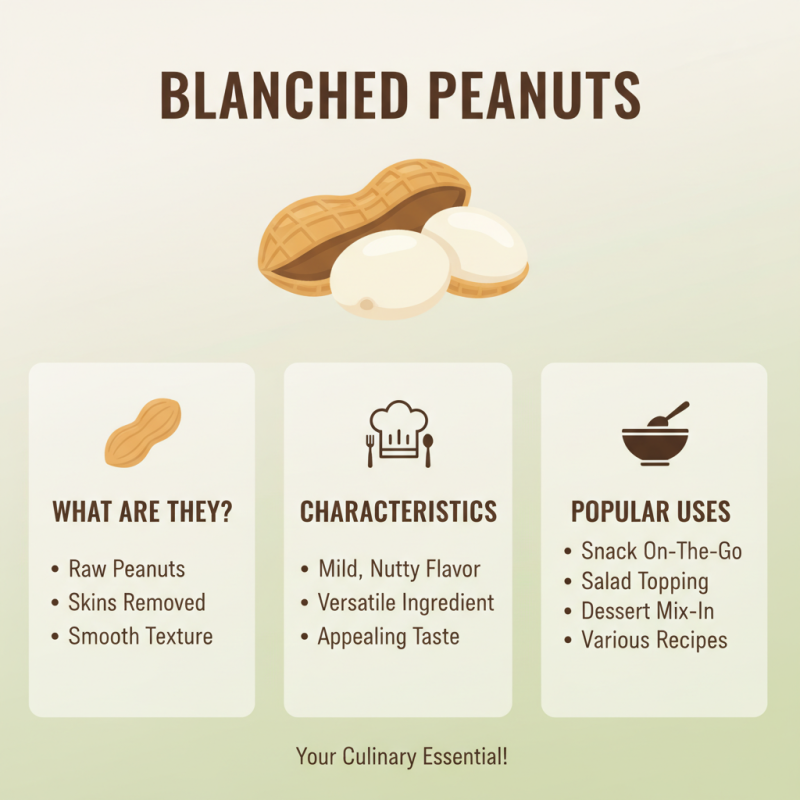
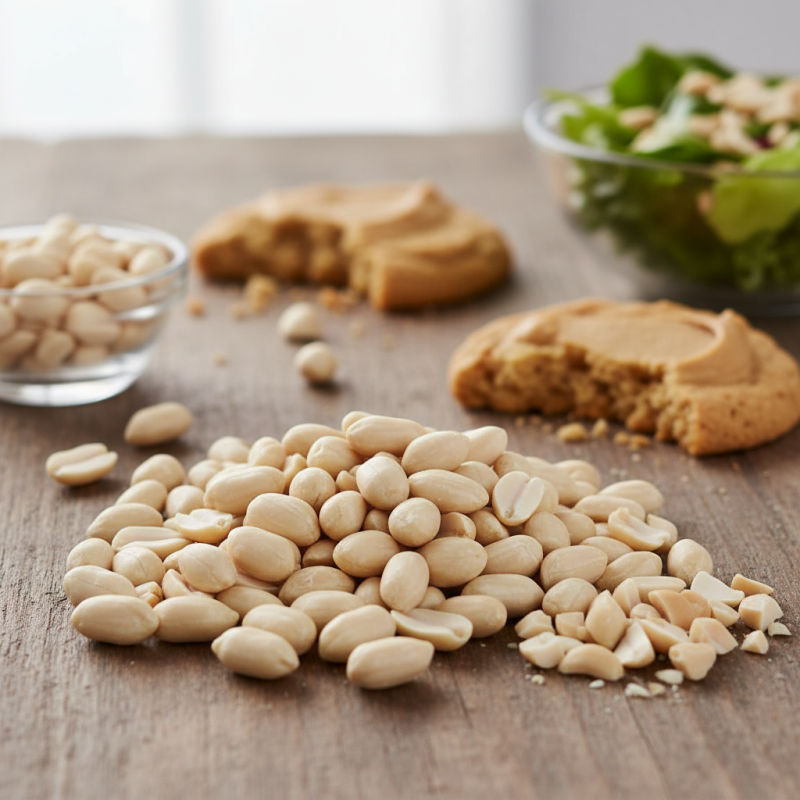
Blanched peanuts are raw peanuts with their skins removed. They have a smooth texture and a mild, nutty flavor. These peanuts are often used in various dishes due to their versatility. They can be eaten as a snack, added to salads, or mixed into desserts. Their appealing taste makes them a popular choice for many recipes.
Nutritionally, blanched peanuts are rich in protein and healthy fats. They provide essential nutrients like vitamin E, magnesium, and phosphorus. These nutrients support heart health and may promote better brain function. However, it's important to consume them in moderation. Overindulging can lead to excessive calorie intake. It's also worth noting that some people may have allergies to peanuts, which can trigger serious reactions.
Incorporating blanched peanuts into your diet is simple. Toss them into a stir-fry for added crunch. Blend them into smoothies for creaminess. Yet, be mindful of portion sizes and individual dietary needs. While they offer health benefits, balance is key for any healthy eating routine. Enjoy the versatility but keep moderation in mind.
The Process of Blanching Peanuts: A Step-by-Step Guide
Blanching peanuts is a simple yet effective process. It helps in removing the skin while enhancing the nut's flavor. To start, gather fresh, raw peanuts and rinse them under cold water. This step removes any dust and impurities.
Next, bring a pot of water to a rolling boil. Once boiling, carefully add the peanuts. Allow them to boil for about 3-5 minutes. Be cautious not to overcook; else, they might lose their essence. After boiling, quickly drain the peanuts and plunge them into ice water. This shocking process stops the cooking and gives your peanuts a crisp texture.
Once cooled, the skins should easily slip off. You might find some skins stubborn, requiring gentle persuasion. It’s okay; not every peanut will be perfect. After peeling, these nuts are ready for snacks or cooking. Use them in salads, desserts, or even savory dishes. Blanched peanuts add a delightful crunch and a rich flavor to various recipes. Each step is essential, yet mistakes can lead to surprisingly good results too. Embrace the process!
Blanched Peanuts Nutritional Values and Uses
This chart displays the nutritional composition of blanched peanuts per 100 grams compared to raw peanuts. Blanching not only alters the texture but can also change the nutritional profile slightly. Understanding these values can help in cooking and dietary planning.
Cooking and Baking with Blanched Peanuts: Tips and Techniques
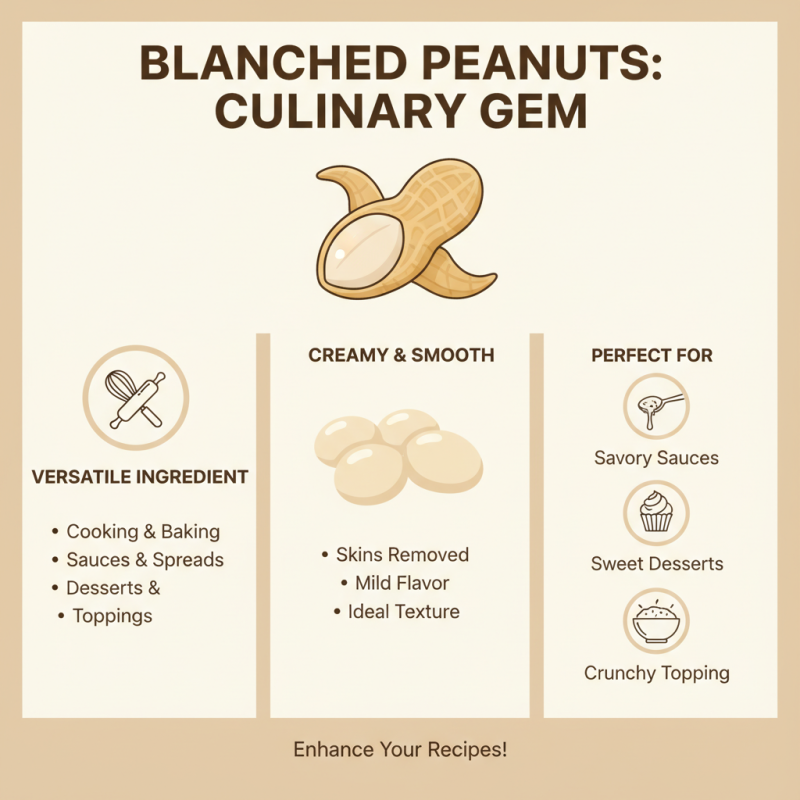
Blanched peanuts are versatile ingredients in cooking and baking. Their skins are removed, leaving behind creamy, smooth nuts. This makes them perfect for many recipes. You can use them in sauces, desserts, or as a crunchy topping.
When baking, try incorporating blanched peanuts into cookies or cakes. They add a lovely texture. Chopped peanuts enhance flavors in brownies too. But be careful with the amount. Too many can overpower other ingredients.
In cooking, they are great in stir-fries or salads. Toss them in at the end to keep them crunchy. Adding blanched peanuts to savory dishes can create an interesting contrast. Remember, balance is key. Experimenting is essential. You might not get it right the first time, but that’s okay. Keep trying; each attempt teaches you something new.
Creative Recipes Featuring Blanched Peanuts for Every Meal
Blanched peanuts are a delicious and versatile ingredient. They add a delightful crunch to various dishes. One creative way to use them is in stir-fries. Add blanched peanuts to your favorite vegetable mix for added texture. They hold up well under heat and infuse flavor into the dish.
Another fun option is to incorporate blanched peanuts into salads. Toss them with fresh greens, cherry tomatoes, and a light vinaigrette. The contrast of flavors is satisfying. You could even sprinkle them on homemade granola for an extra protein boost. Just remember, not everyone enjoys the taste of peanuts. You might want to check with your guests first.
For snacks, consider making a peanut dip. Blend blanched peanuts with garlic, lemon juice, and a touch of olive oil. Serve it with pita bread or veggie sticks. It’s simple yet effective. Feel free to adjust the seasoning, though it may take a few tries to perfect it. Experimentation can lead to delightful surprises.
Storage and Shelf Life: How to Keep Blanched Peanuts Fresh
Blanched peanuts are a versatile ingredient that can add flavor and texture to many dishes. Proper storage is crucial to maintain their freshness. When you buy blanched peanuts, they often come in a sealed package. It’s best to keep them in a cool, dry place. Avoid direct sunlight, which can degrade their quality.
For longer shelf life, consider refrigerating or freezing them. Place blanched peanuts in an airtight container. This helps prevent moisture and air exposure, which can lead to spoilage. If you notice any off smells or signs of mold, they should be discarded immediately. Make sure to check regularly; sometimes, we forget about items in the back of the pantry.
When stored correctly, blanched peanuts can last several months. However, using them within two months after opening is recommended. It’s easy to overlook smaller packages once they're opened. Keeping track of their freshness can save you from unpleasant surprises. Always trust your senses; if they don’t smell right, it’s better to err on the side of caution.