Leave Your Message

China Top 10 Walnuts ELH Suppliers for Global Buyers?

China remains a major force in the global walnut industry, supported by extensive orchards, processing capacity, and established export channels. USDA Foreign Agricultural Service estimates China’s walnut production at more than one million metric tons annually in recent marketing years. The International Nut and Dried Fruit Council also identifies China as one of the world’s leading walnut producers. These figures explain growing buyer interest in China-based suppliers.

Quality still matters more than volume.

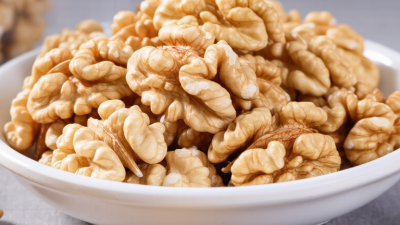
For global buyers, Walnuts Elh usually refers to extra-light halves, a premium kernel grade valued for its pale color and attractive appearance. However, grading language can differ between suppliers, regions, and inspection systems. Buyers should confirm kernel color, half-piece percentage, moisture, foreign material limits, pesticide documentation, packaging, and crop year before comparing quotations. A low price may hide higher breakage or inconsistent sorting.

This guide reviews ten China-based walnut suppliers connected with international trade. It considers processing experience, export capability, certifications, product consistency, factory resources, and buyer communication. Relevant evidence may include USDA market reports, INC statistical publications, supplier audit records, and independently verified shipment information. No ranking is perfect. Supplier conditions can change after harvest.

A serious sourcing decision needs more than a polished website.

The strongest candidates should provide traceable specifications, representative samples, and clear terms for inspection. Buyers should also check whether “ELH” matches their own contract definition. That small detail can prevent expensive misunderstandings. Prices, harvest conditions, and logistics may change quickly, so this overview should support due diligence rather than replace it.
China Top 10 Walnuts ELH Suppliers for Global Buyers?

What Makes China a Leading Supplier of ELH Walnuts

China Top 10 Walnuts ELH Suppliers for Global Buyers

What Makes China a Leading Supplier of ELH Walnuts

China has become a major source of ELH walnuts, meaning extra light halves. Buyers often value their pale color, clean appearance, and mild flavor. Large growing regions provide steady harvest volumes. Modern shelling facilities also support year-round processing and export preparation.

Experienced suppliers usually combine orchard sourcing with controlled grading lines. Workers remove shell fragments, dark pieces, and damaged kernels. Optical sorting can improve consistency, but it is not perfect. Human inspection still matters. Reliable exporters provide moisture data, crop-year details, packing photos, and traceability records. These details help buyers compare shipments with fewer surprises.

Tips: Request a recent sample before placing a large order. Check kernel size, breakage, moisture, and carton weight. Ask how suppliers handle rejected or discolored pieces. Confirm food-safety certificates through independent verification. Packaging should protect the walnuts from heat, humidity, and strong odors during transit. A sealed inner bag and strong outer carton can make a practical difference. Some buyers focus too heavily on price. That can be a mistake. Low offers may reflect smaller kernels, higher breakage, or weaker storage control. China’s advantage is broad production capacity, flexible processing, and established logistics, though quality still depends on each supplier’s actual management.
How the Top 10 Chinese ELH Walnut Suppliers Are Selected

China Top 10 Walnuts ELH Suppliers for Global Buyers?

How the Top 10 Chinese ELH Walnut Suppliers Are Selected

Selecting leading Chinese ELH walnut suppliers requires more than comparing online catalogs. The process begins with verified processing experience, stable orchard sourcing, and clear knowledge of ELH grading standards. Inspectors review kernel size, shell fragments, color, moisture, and breakage rates. A practical sample may include several cartons, not only attractive pieces from the top layer.

Quality evidence matters. Suppliers should provide recent laboratory reports, traceability records, packaging specifications, and export documentation. Factory assessments examine sorting lines, cold storage, sanitation controls, and pest-prevention measures. Auditors also check whether production records match the shipment. Small details matter here. A damp carton can damage otherwise sound walnuts during a long voyage.

Reliability is measured over time. Buyers compare response speed, sample consistency, order capacity, complaint handling, and delivery performance. Independent references can strengthen the review, while vague claims weaken it. No scorecard is perfect. A polished sample may hide seasonal variation, and one successful shipment cannot prove lasting quality. For this reason, suppliers are ranked through repeated communication, batch comparisons, and, when possible, on-site verification. Transparent limitations are treated as a sign of maturity, not failure.

China Top 10 Walnuts ELH Suppliers for Global Buyers? - How the Top 10 Chinese ELH Walnut Suppliers Are Selected
Priority Selection Dimension Weight Practical Buyer Benchmark for ELH Walnuts Documents or Tests Required Why It Matters to Global Buyers
1 ELH product identity and grade consistency 18% Product must be contractually defined as Extra Light Halves, with agreed requirements for half-kernel integrity, color, size, foreign material, insect damage, and off-odors. Approved product specification, representative pre-shipment sample, inspection report, and retained production sample. Clear grade definitions reduce disputes caused by different interpretations of “ELH” and “light halves.”
2 Food-safety management 16% Facility should operate a documented HACCP-based food-safety system and demonstrate controls for allergens, sanitation, pests, metal, glass, and foreign materials. Valid food-safety certificate where applicable, HACCP plan, sanitation records, internal-audit records, and recent third-party audit report. Walnuts are ready-to-eat or minimally processed in many applications, so preventive controls are essential.
3 Aflatoxin and microbiological control 14% Every shipment should meet the importing market’s legal limits for aflatoxins and microbiological criteria. Testing frequency should be risk-based and documented. Independent laboratory COA, sampling plan, aflatoxin results, Salmonella results where required, and laboratory accreditation details. Legal limits differ by destination, making destination-specific testing more reliable than a single universal specification.
4 Moisture and shelf-life management 11% A common commercial benchmark is kernel moisture at or below approximately 6%, unless the purchase contract specifies another value. Product must be protected from condensation and rancidity. Moisture test method, lot-level results, warehouse humidity records, packaging specification, and shelf-life validation. Excess moisture can increase mold risk, while poor storage can accelerate oxidation and loss of flavor.
5 Traceability from orchard to shipment 10% Each lot should be traceable through supplier or orchard source, harvest season, processing date, packaging date, and export shipment. Lot-code system, traceability exercise, supplier approval list, receiving records, and one-step-back/one-step-forward documentation. Traceability supports recalls, claim investigation, regulatory inquiries, and verification of harvest-season information.
6 Processing and sorting capability 9% Facility should demonstrate cleaning, cracking, separation, optical or manual sorting, metal detection, and controlled packing operations suitable for light-colored halves. Process-flow diagram, equipment list, calibration records, line photographs or audit evidence, and production-capacity statement. Consistent ELH output depends on effective separation of halves, pieces, shells, dark kernels, and damaged kernels.
7 Packaging and export protection 8% Packaging should be food-contact compliant, sealed against moisture and pests, and suitable for the agreed transport mode. Common formats include vacuum bags, cartons, and lined bulk boxes. Packaging material declaration, food-contact compliance documents, packing photographs, pallet configuration, and container-loading procedure. Correct packaging helps preserve color, texture, flavor, and product safety during ocean or inland transportation.
8 Export documentation and regulatory readiness 6% Exporter must be able to provide accurate commercial invoices, packing lists, certificates of origin, health or phytosanitary documents when required, and destination-specific declarations. Redacted sample document set, export registration information, customs classification confirmation, and previous shipment documentation. Accurate documentation reduces customs delays, clearance costs, and the risk of shipment rejection.
9 Supply capacity and delivery reliability 5% Supplier should show realistic seasonal availability, production lead time, minimum order quantity, loading capacity, and a documented plan for delayed raw-material supply. Production schedule, inventory policy, lead-time record, capacity evidence, and anonymized on-time-delivery history. Availability and delivery performance are important for retail programs, ingredient contracts, and recurring container orders.
10 Commercial transparency and after-sales control 3% Quotation should clearly state crop year, grade, packing, tolerances, Incoterm, payment terms, inspection rules, claim period, and replacement or credit procedure. Signed specification, quotation comparison sheet, complaint-handling procedure, and agreed pre-shipment inspection clause. Transparent commercial terms make supplier comparisons more objective and provide a workable remedy if quality differs from the contract.
Recommended selection method: shortlist suppliers that meet all mandatory food-safety and destination-regulatory requirements first, then rank the remaining candidates using the weighted dimensions above. The final decision should be based on document review, independent laboratory testing, pre-shipment inspection, and a successful trial shipment rather than online claims alone.
Benchmarks marked as “common” or “typical” should be confirmed against the buyer’s contract, importing-country regulations, product application, and the latest laboratory or inspection requirements.

Supplier Profiles: Products, Regions, Capacity, and Export Strengths

China Top 10 Walnuts ELH Suppliers for Global Buyers?

China’s walnut supply base is concentrated across Xinjiang, Yunnan, Gansu, and Shaanxi. These regions offer different kernel sizes, harvest periods, and processing conditions. The International Nut and Dried Fruit Council reported strong global walnut output in recent seasons, with China remaining a major producer and consumer. USDA Foreign Agricultural Service reports also identify China as a leading walnut-producing country. However, supplier rankings should not rely on volume alone.

A practical top-ten review should compare whole walnuts, halves, light-colored kernels, diced kernels, and walnut oil. Xinjiang processors often provide larger volumes and established export packing. Yunnan suppliers may offer mixed grades and flexible private-label processing. Gansu and Shaanxi facilities can be competitive for domestic collection and seasonal sourcing. Reported annual capacity ranges from several hundred to several thousand tonnes, but figures require factory verification. Export strengths include HACCP systems, cold storage, shelling lines, multilingual documentation, and experience with container shipments to Europe, Southeast Asia, and the Middle East. Public data is imperfect. Some capacity claims appear optimistic.

Tips: Request two recent harvest samples, not one. Check moisture, peroxide value, aflatoxin results, foreign-material controls, and kernel color. Compare loading capacity during the peak season. Ask for third-party inspection records and traceability from orchard to carton. The FAO and USDA emphasize food safety, storage, and quality controls as important factors in nut trade. A cheaper quote can become expensive after breakage, delayed loading, or rejected lots.

Quality Standards, Processing Methods, and Food Safety Certifications

China Top 10 Walnuts ELH Suppliers for Global Buyers?

Quality Standards, Processing Methods, and Food Safety Certifications

For global buyers, ELH usually means extra-light walnut halves with a pale, clean appearance. Quality starts with sound kernels, low moisture, and limited shell fragments. Experienced purchasing teams should inspect color, size, breakage, rancidity, and insect damage. A clear product specification prevents costly misunderstandings. Ask for recent laboratory reports, not old promotional samples. Crop quality can change quickly.

Processing details reveal a supplier’s real capability. Walnuts may be cleaned, dried, graded, electronically sorted, and packed under controlled conditions. Low-temperature drying helps protect flavor and texture, but excessive heat can reduce quality. Manual inspection still matters. Machines are useful, not perfect. Food safety systems should include HACCP, ISO 22000, or comparable certification. Some facilities may also hold BRCGS or IFS certification, depending on their target markets. Buyers should verify certificate numbers, audit dates, product scope, and issuing bodies. A certificate alone does not guarantee every shipment.

Reliable suppliers should provide batch traceability from orchard intake to final packaging. Testing may cover aflatoxins, pesticide residues, moisture, microbiological risks, and heavy metals. Request sealed samples and compare them with the delivered lot. This step feels slow, but it often exposes hidden differences. Even careful buyers can overlook packaging humidity or transport delays. Regular audits, documented corrective actions, and honest communication make supplier evaluation more dependable.

How Global Buyers Can Compare and Choose the Right Supplier

Global buyers comparing China’s top 10 ELH walnut suppliers should examine more than quoted prices. ELH usually means extra-light halves, where color, size, cleanliness, and breakage strongly influence value. The USDA Foreign Agricultural Service estimated global walnut production at roughly 1.5 million metric tons in 2024/25, increasing supply pressure and making consistent grading more important. Ask each supplier for recent crop data, shelling yield, moisture results, and a retained sample from the same lot.

A reliable supplier should provide traceability from orchard or cooperative to packed carton. Request laboratory reports for aflatoxin, pesticide residues, moisture, peroxide value, and microbiological safety. Check whether testing follows recognized methods, such as those used by ISO-accredited laboratories. The International Nut and Dried Fruit Council’s Statistical Yearbook shows continuing growth in international tree-nut trade, but shipment volume does not prove quality. Inspect carton liners, vacuum performance, cold-chain records, and pallet protection. Small details matter.

Compare at least three delivered-cost scenarios, including freight, insurance, inspection, duties, and possible claims. Confirm Incoterms, payment protection, lead time, and replacement procedures before signing. Video audits help, but they are not enough. An on-site inspection remains stronger evidence. I would also test two or three production lots, not one attractive sample. Suppliers may perform differently after harvest. Perfect comparison is unrealistic; seasonal variation, broken halves, and color changes can still surprise experienced buyers. (Sources: USDA Foreign Agricultural Service, Tree Nuts Annual 2024; International Nut and Dried Fruit Council, Statistical Yearbook 2024.)