How to Use Walnut Kernels for Health Benefits and Delicious Recipes?
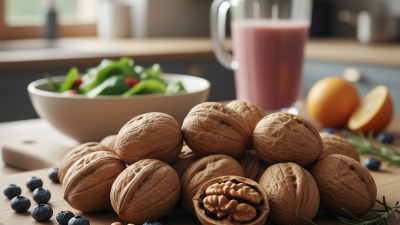
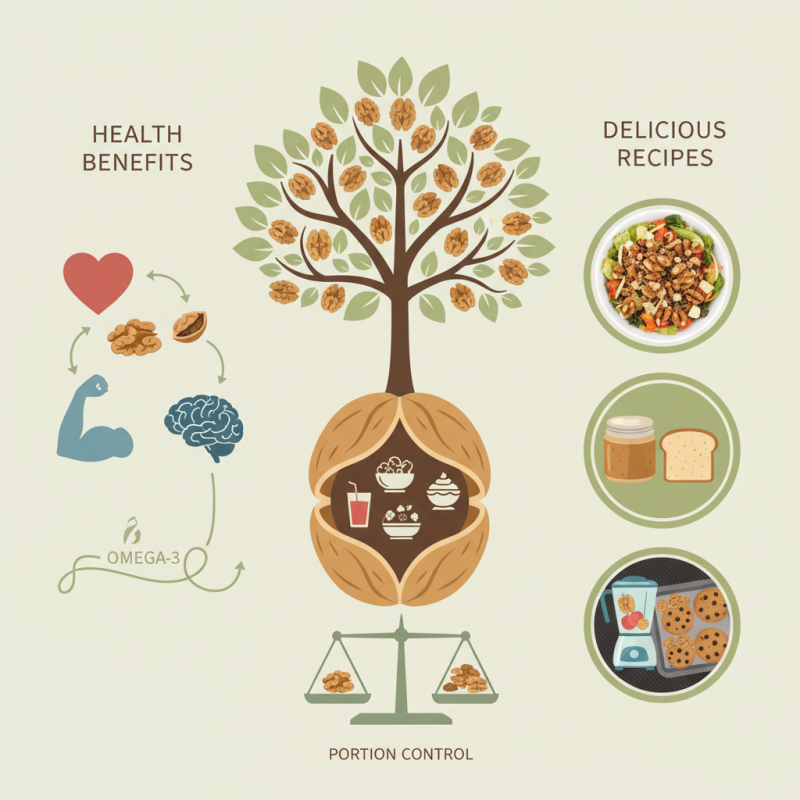
Walnut Kernels are often overlooked in our diets, yet they offer remarkable health benefits. These tiny powerhouses are rich in essential fatty acids, antioxidants, and protein. Including Walnut Kernels in your meals can enhance heart health and boost brain function. Their unique flavor makes them versatile in various dishes, from salads to desserts.
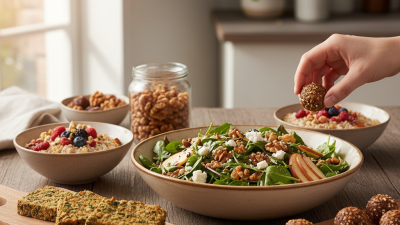
Imagine a warm salad topped with toasted Walnut Kernels, adding a delightful crunch. Or consider a creamy walnut butter spread on fresh bread. Such simple recipes can transform ordinary meals into culinary delights. However, balancing nut consumption requires mindfulness. Overindulgence can lead to excessive calorie intake, prompting necessary reflection on portion sizes.
Health benefits aside, the joy of cooking with Walnut Kernels lies in experimentation. Mixing them into smoothies or using them in baking can enhance both flavor and nutrition. Engaging our senses through diverse recipes can make healthy eating enjoyable. Embrace the potential of Walnut Kernels, and discover how they can positively impact your health and culinary experiences.
Benefits of Walnut Kernels: Nutritional Profile and Health Impact
Walnut kernels are more than just a tasty snack. They are packed with nutrients that can enhance your health. Rich in omega-3 fatty acids, walnuts support heart health. These healthy fats help reduce cholesterol levels and inflammation. Many people overlook the brain-boosting benefits of these nuts. They contain antioxidants that protect brain cells from oxidative stress.
Moreover, walnut kernels provide significant amounts of protein, fiber, and essential vitamins. These elements contribute to better digestion and overall well-being. Incorporating walnuts into your diet can be simple. Toss them in salads for a crunchy texture. Blend them into smoothies for added creaminess. Some might find the flavor overwhelming when consumed alone, though.
Many enjoy using walnuts in baked goods. They add a delightful taste to breads and cookies. However, some recipes can mask their distinct flavor. This could be a missed opportunity to enjoy their health benefits fully. Remember that moderation is key. Eating too many walnuts may lead to weight gain. Consider your intake carefully. Each handful can offer delightful flavor and health perks, but balance is essential.
How to Use Walnut Kernels for Health Benefits and Delicious Recipes?
| Nutritional Component |
Amount per 100g |
Health Benefits |
| Calories |
654 kcal |
Provides energy |
| Protein |
15.2 g |
Supports muscle growth and repair |
| Fat |
65.2 g |
Contains healthy omega-3 fatty acids |
| Fiber |
6.7 g |
Aids digestion |
| Vitamin E |
0.7 mg |
Antioxidant properties |
| Magnesium |
158 mg |
Supports bone health |
| Antioxidants |
High |
Reduces inflammation and oxidative stress |
Incorporating Walnut Kernels into Your Diet: Recommended Daily Intake
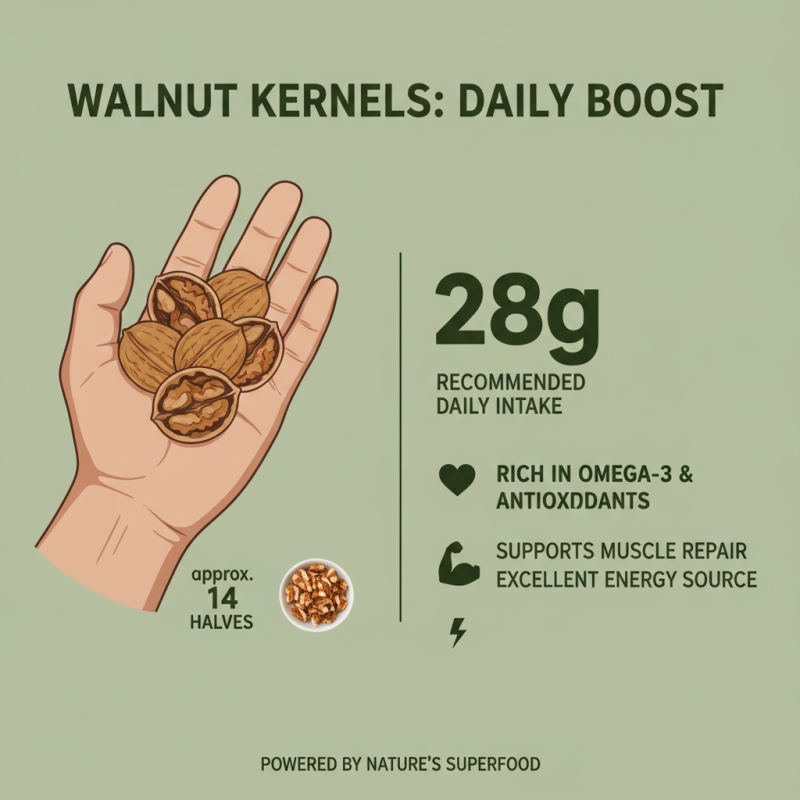
Incorporating walnut kernels into your diet can be a simple and enjoyable way to boost your health. These nutritious nuts are rich in omega-3 fatty acids, antioxidants, and essential vitamins. Aim for about a handful each day. This usually amounts to about 28 grams or roughly 14 walnut halves. They provide an excellent source of protein, which is beneficial for muscle repair and energy.
Try adding walnuts to your morning oatmeal or yogurt. They add a great crunch and depth of flavor. A handful can also enhance your salad’s texture and nutritional value. But, sometimes it’s easy to go overboard. Be mindful of portion sizes to avoid excess calories. Not everyone appreciates the taste, though. Some may find the texture a bit gritty or the flavor overwhelming. Experimenting with different recipes can help in finding the right balance for your palate.
Walnut oil is another option. Use it in salad dressings or drizzled over vegetables. Its rich, nutty flavor can transform ordinary dishes. However, paying attention to your cooking method is crucial. High temperatures can diminish its benefits. Reflect on your dietary habits regularly to integrate walnuts thoughtfully. Finding the right amount can be trial and error, but the potential rewards are well worth the effort.
Delicious Recipes Using Walnut Kernels: From Snacks to Main Dishes
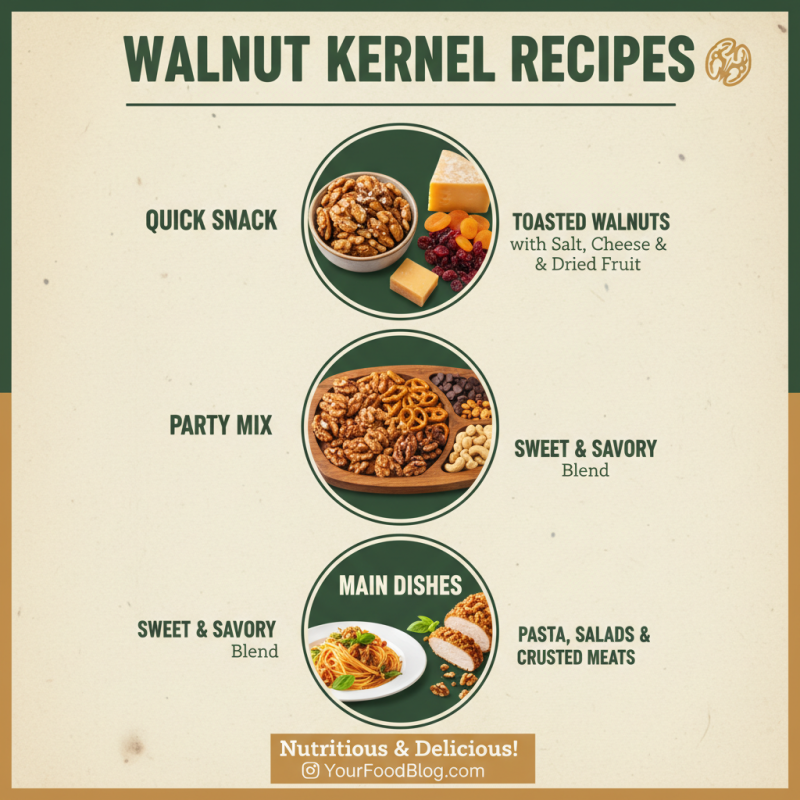
Walnut kernels are not just nutritious; they can elevate your meals too. You can use them in various recipes, from snacks to main dishes. For a quick snack, try toasting walnuts with a pinch of salt. They become crunchy and flavorful. Pair them with cheese or dried fruits for a perfect party mix.
For a delicious main dish, consider a walnut crusted fish. Coat the fish fillets with crushed walnuts, then bake until golden. The nutty crust adds texture and flavor depth. You might find it a little tricky to get the coating just right.
Another great option is walnut pesto. Blend walnut kernels with garlic, olive oil, and basil. This creates a unique twist on traditional pesto. Stir it into pasta or use it as a spread. It may take a few attempts to balance the flavors to your liking. Experimenting is key to finding the right blend. Enjoy the journey of cooking with walnuts!
Scientific Studies Supporting the Health Benefits of Walnut Consumption
Walnuts are packed with nutrients that benefit health in numerous ways. Scientific studies highlight their positive effects on heart health. Regular consumption of walnuts can lower cholesterol levels. They contain omega-3 fatty acids, which help reduce inflammation in the body. This is crucial for long-term heart health.
Research suggests that walnuts may also boost brain function. They are rich in antioxidants that protect brain cells. Some studies indicate that walnut consumption might improve memory and cognitive abilities. However, it’s worth considering the balance of omega-6 to omega-3 fatty acids. Overconsumption of walnuts could lead to an excess of omega-6, causing potential issues.
Incorporating walnuts into meals is easy and delicious. You can add them to salads or sprinkle them on oatmeal. They also work well in baked goods, adding texture and flavor. For a quick snack, try walnuts with a piece of fruit. Be mindful, though; portion control is key. Enjoying walnuts mindfully can enhance their health benefits while keeping your diet balanced.
Health Benefits of Walnut Consumption
Storage and Preparation Tips for Maximizing Walnut Kernel Freshness
Walnut kernels are a powerhouse of nutrients, but proper storage is key to retaining their freshness. Studies indicate that walnuts contain high levels of antioxidants and healthy fats, which degrade quickly when exposed to air and light. A report by the USDA found that walnuts can lose up to 50% of their nutritional value if not stored correctly.
To maximize freshness, store walnut kernels in an airtight container. Keep them in a cool, dark pantry or refrigerator. The ideal temperature for storage is around 32°F to 40°F. Whole walnuts can last for a year when stored properly. Shelled walnuts may only last six months. Make it a habit to check for rancidity. A bitter taste often signals spoilage.
Preparation methods can also affect their nutritional benefits. Lightly toasting walnuts enhances their flavor but can reduce some omega-3 fatty acids. Aim for a gentle roast, just until they are fragrant. A mere five minutes can make a difference. As you incorporate walnuts into your diet, it’s beneficial to experiment with different recipes. Yet, do not overlook the significance of their freshness in your health journey.