Sourcing reliable Blanched Peanuts requires more than comparing prices on a supplier website. Global buyers need consistent kernels, clean processing, accurate specifications, and dependable export performance. In 2026, supplier evaluation should consider origin, blanching methods, moisture levels, size grades, packaging, and documented quality controls. These details affect flavor, shelf life, production efficiency, and customer acceptance.
This guide examines leading Blanched Peanuts suppliers for international purchasing teams. It focuses on practical evidence, including factory experience, food safety systems, traceability procedures, laboratory testing, and export references. Buyers should request current certificates, product samples, allergen information, and recent inspection records before signing contracts. A polished catalog proves little. Verifiable documents matter more.
Logistics also deserve close attention. A supplier may offer attractive pricing but lack stable container planning or suitable moisture protection. Clear terms for shipment, payment, claims, and quality disputes can prevent expensive misunderstandings. No ranking is flawless. Market conditions, crop quality, exchange rates, and factory capacity can change during the year. Even experienced buyers can overlook small warning signs, especially when deadlines are tight. This overview provides a structured starting point, while final approval should follow independent verification, sample testing, and a careful review of the buyer’s specific market requirements.
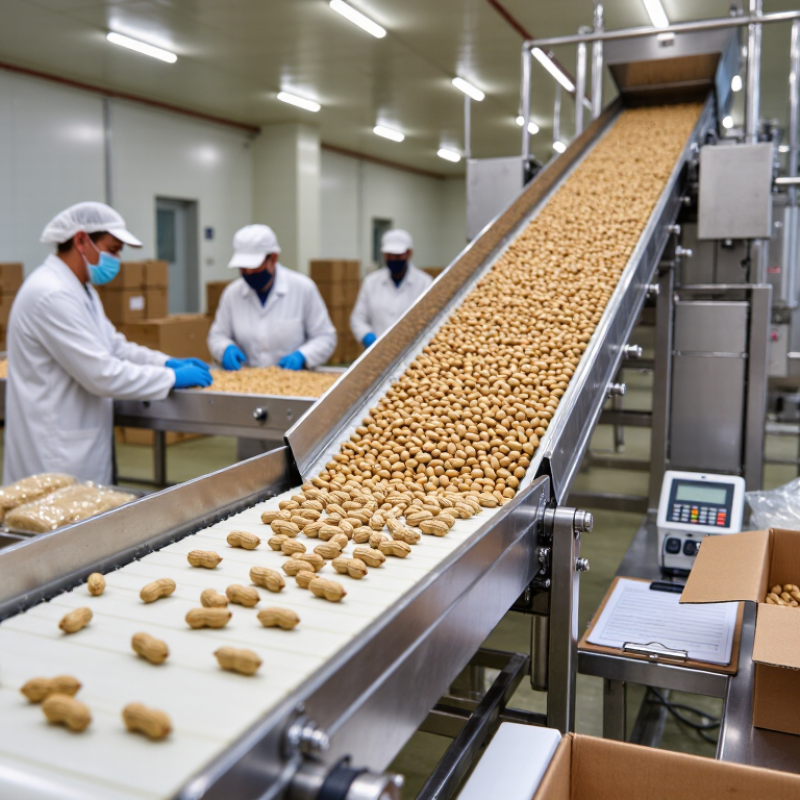
Blanched peanuts are peanuts with their red-brown skins removed after heat treatment, soaking, or mechanical rubbing. The result is a pale kernel with a cleaner appearance and milder flavor. Buyers use them in peanut butter, confectionery, bakery fillings, sauces, and roasted snack products. Their smooth surface also supports more even grinding and color control.
Global supply remains concentrated in major peanut-growing regions. The USDA Foreign Agricultural Service estimated world peanut production at roughly 50 million metric tons in recent 2024/25 projections. China and India remain major producers, while the United States continues to influence export quality and grading practices. FAOSTAT data also show that peanut production and trade can shift with rainfall, planted area, and input costs. Small changes matter.
Quality begins before shipment. Export buyers should check kernel size, moisture, split percentage, aflatoxin results, pesticide compliance, and packaging strength. A practical inspection includes sampling cartons, checking odor, and testing broken kernels. Blanching can improve appearance, but it cannot repair poor raw material. This point is often underestimated. Market reports also group different peanut products together, which can make blanched-peanut figures less precise. Therefore, buyers should compare supplier specifications with customs data and independent laboratory results. USDA FAS Oilseeds: World Markets and Trade and FAOSTAT provide useful reference points, but neither replaces shipment-level verification.
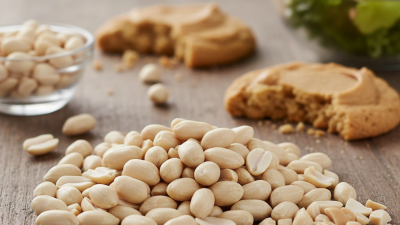
Blanched peanuts are peanuts with the red skin removed through controlled heat, water, or mechanical processing. They are widely used in confectionery, peanut butter, bakery products, snacks, sauces, and edible oil production. The chart shows reported peanut production in selected leading producing countries, measured on an in-shell basis.
Source: FAOSTAT crop and livestock products database, 2022 production data; figures are rounded to the nearest 0.1 million metric tonnes.
For global buyers, supplier evaluation should begin with crop knowledge, not a polished website. USDA’s 2024/25 Production, Supply and Distribution data estimates global peanut production above 50 million metric tons. That scale creates wide differences in variety, harvest timing, moisture, and aflatoxin risk. Experienced suppliers should explain their origin regions, crop year, blanching temperature, and expected kernel yield. Ask for recent lot records, not general promises.
Quality documents must match the actual shipment. Check moisture, peroxide value, foreign matter, broken kernels, microbiological results, and aflatoxin testing. The Codex General Standard for Contaminants and Toxins provides an international reference, but destination-country limits may differ. A credible supplier uses accredited laboratories and keeps samples from each lot. Certificates alone are not enough. I would verify them independently.
Blanching performance also affects factory costs. Request trial samples packed in the proposed export format. Measure skin removal, kernel breakage, color uniformity, odor, and sorting loss after storage. The INC Statistical Yearbook tracks peanuts within the wider global nuts and dried fruits market, where consistency remains a major commercial concern. Suppliers should offer traceability from farm or collection point to container. They should also explain recall procedures and allergen controls clearly. A cheap offer may reflect lower sorting or unstable supply. That is easy to miss. A small pilot order may reveal more than a long sales presentation.
| Evaluation Dimension | Recommended Buyer Benchmark | Suggested Weight | Evidence to Request | Why It Matters |
|---|---|---|---|---|
| Food Safety Certification | Valid certification under a GFSI-recognized scheme, such as BRCGS, SQF, FSSC 22000, or IFS, where required by the buyer. | 15% | Current certificate, scope, expiry date, audit grade, and corrective-action records. | Shows that the supplier operates a documented food-safety management system. |
| Aflatoxin Control | Every lot should comply with the destination market’s legal limit. For reference, the United States FDA action level for total aflatoxins in human food is 20 ppb; European Union limits are generally stricter for direct human consumption. | 15% | Independent laboratory report for each shipment or defined sampling frequency, including aflatoxin B1 and total aflatoxins. | Peanuts are susceptible to aflatoxin contamination before and after harvest, and requirements vary by country. |
| Salmonella and Microbiological Safety | Salmonella should be absent in the analytical portion specified by the applicable regulation or purchase specification. Yeast, mold, and total plate count limits should be contract-defined. | 12% | Recent microbiological test results, sampling plan, laboratory accreditation, and sanitation program. | Blanching reduces microbial risk but does not replace hygienic handling, testing, and controlled storage. |
| Moisture and Water Activity | Set a purchase specification for moisture and target water activity appropriate to the product. A water activity of 0.60 or below is commonly used as a practical target for shelf-stable low-moisture foods, subject to product validation. | 10% | Certificate of analysis showing moisture, water activity, test method, and lot number. | Excess moisture can accelerate mold growth, rancidity, clumping, and loss of crunch. |
| Blanching Performance | Kernels should be free from loose skins within the agreed tolerance, with minimal heat damage, scorching, splitting, and mechanical breakage. | 10% | Approved sample, production photographs, defect-count results, and pre-shipment inspection report. | Consistent blanching affects appearance, processing yield, flavor, and suitability for snacks, confectionery, and peanut butter. |
| Size and Grade Consistency | Use a defined count or size range, such as kernels per ounce or kernels per 100 grams, together with tolerances for undersized and oversized kernels. | 8% | Grading report, sieve or count data, retained sample, and lot-level inspection records. | Uniform size improves roasting, portion control, visual quality, and production-line efficiency. |
| Defect and Foreign-Material Control | Contractually define limits for discolored, rancid, insect-damaged, moldy, split, and shriveled kernels. Foreign material should be absent or within the destination market’s legal tolerance. | 8% | Third-party inspection, metal-detector verification, optical-sorting records, and defect classification sheet. | Defects influence consumer acceptance, food safety, processing losses, and claims after delivery. |
| Allergen and Cross-Contact Management | Peanuts must be clearly identified as an allergen, and the supplier should maintain documented allergen segregation, cleaning, labeling, and changeover controls. | 7% | Allergen policy, site allergen map, cleaning validation, label approval, and incident history. | Correct allergen control is essential for legal compliance and consumer protection. |
| Traceability and Recall Readiness | The supplier should trace each finished lot to raw-peanut source, processing date, packaging records, test results, and shipment documentation. | 6% | Lot-code procedure, mock-recall result, raw-material records, and one-step-back/one-step-forward traceability evidence. | Fast traceability limits the scope and cost of a food-safety incident. |
| Packaging and Shelf-Life Protection | Packaging should protect against oxygen, moisture, light, pests, and physical damage. Shelf life must be supported by product and packaging validation under stated storage conditions. | 5% | Packaging specification, seal-integrity checks, shelf-life study, storage instructions, and palletization plan. | Peanuts contain oil and can develop rancid flavors when exposed to oxygen, heat, or light. |
| Export Documentation and Compliance | Supplier should provide commercial invoice, packing list, certificate of origin when required, health or phytosanitary documents where applicable, and accurate product labeling. | 4% | Sample document pack, labeling artwork, HS classification confirmation, and destination-market compliance checklist. | Complete documentation reduces customs delays, relabeling costs, and border rejection risk. |
| Supply Capacity and Lead Time | Evaluate confirmed monthly capacity, seasonal availability, minimum order quantity, production lead time, and contingency plans for raw-material shortages. | 5% | Capacity statement, production calendar, inventory policy, lead-time history, and business-continuity plan. | Reliable capacity supports continuous manufacturing and reduces emergency purchasing. |
| Commercial Competitiveness | Compare total landed cost rather than unit price alone, including product price, packaging, testing, freight, insurance, duties, payment terms, and claim provisions. | 5% | Comparable quotation, Incoterms® 2020 rule, payment terms, freight assumptions, and quality-claim procedure. | A low quoted price may not represent the lowest delivered or risk-adjusted cost. |
| Total Evaluation Weight | 100% | Use the same specification, documents, sample size, and scoring method for every candidate supplier. | ||
China, India, Argentina, the United States, and Brazil remain important peanut-sourcing regions. USDA Foreign Agricultural Service projections place 2025/26 global peanut production near 53 million metric tons. Weather revisions can change this figure.
China offers dense processing clusters, strong shelling capacity, and convenient access to Asian ports. Many facilities handle blanching, skin removal, grading, and vacuum packing in one location. India provides competitive labor costs and broad farmer networks. Its western ports support shipments to the Middle East, Europe, and Southeast Asia. However, buyers should verify moisture control and aflatoxin testing for every lot.
Argentina is known for large kernels, reliable blanching performance, and high-oleic varieties. These qualities suit snack, confectionery, and peanut-butter manufacturers. The United States offers detailed traceability, standardized grading, and mature food-safety systems. Brazil adds expanding acreage and strong export potential, especially from central farming zones.
The International Nut and Dried Fruit Council reports continuing growth in global peanut availability, but regional quality remains uneven. A low price can hide higher sorting losses. Buyers should request crop-year data, pesticide records, microbiological results, and blanching yield tests. Ask for samples from several production lots. One sample is not enough. Supplier claims also need independent verification. Freight distance, port congestion, and crop rotation deserve equal attention, although many purchasing teams still overlook them.
Quality begins before blanching. Suppliers should control raw peanut moisture, kernel size, mold, and foreign material. The USDA Foreign Agricultural Service’s Oilseeds: World Markets and Trade report estimated global peanut production at about 50 million metric tons in 2024/25. This scale increases sourcing choices, but it also increases quality variation. Buyers should request recent certificates of analysis, lot photographs, and traceability records. Aflatoxin testing remains essential. Under EU Regulation 2023/915, the limit is 2 µg/kg for aflatoxin B1 and 4 µg/kg for total aflatoxins in many peanut products for direct consumption. Local rules may differ.
Food safety requires more than a clean appearance. Suppliers should test Salmonella, pesticide residues, moisture, and peroxide value. Their facilities should maintain HACCP-based controls and recognized food safety certification. Packaging must protect kernels from oxygen, light, moisture, and crushing. Vacuum bags, lined cartons, or food-grade bulk packaging may suit different shipping distances. Export documents should match the physical lot, including origin, net weight, batch number, treatment records, and certificates required by the destination. ISPM 15 compliance is necessary when wooden pallets or crates are used.
Tips: Ask for a pre-shipment sample. Check seal strength and odor after opening. Confirm allergen statements before artwork approval. A supplier may provide excellent test results, yet weak traceability. That gap deserves a second audit. Minor packaging damage is easy to overlook, but it can create expensive claims after arrival.
2026 Best Blanched Peanuts Suppliers for Global Buyers
Selecting a blanched peanut supplier requires more than comparing prices. Start with a written specification covering size, moisture, skin removal, breakage, flavor, packaging, and shelf life. Request production samples from different lots, not only one attractive sample. A clean sample can still hide inconsistent sorting. Ask for recent laboratory reports covering aflatoxins, microbiological safety, pesticide residues, and allergens. Results should match the requirements of your destination market.
Visit the facility when possible, or arrange a documented remote audit. Check peeling equipment, foreign-material controls, storage temperature, pest prevention, and worker hygiene. Experienced buyers also inspect lot coding and traceability records. Can the supplier identify the farm, processing date, and shipment batch within hours? That answer matters during a quality dispute. Confirm whether the supplier uses calibrated scales and metal detection. Small gaps become expensive later.
Supplier management should continue after the first shipment. Agree on inspection methods, tolerance limits, claim procedures, and response times before signing. Use pre-shipment samples and independent testing for early orders. Review defect rates, delivery accuracy, packaging damage, and communication every quarter. Keep a backup source, even when the main supplier performs well. It feels unnecessary until harvest conditions change. No checklist is perfect. Buyers should record failures honestly and update their approval process instead of protecting a convenient decision.